ABOVE BLACK Play Game Sign in

Ten regions · one playable · free in your browser

Above Black

A game in the form of disclosure. Built out of the public record, and the record is not closed.

You wake on the highway outside Rachel, Nevada with no memory of who you are. The name people here argue about is Majestic Twelve. A disputed document says President Truman put twelve men in a room in 1947 and made them responsible for what was being seen in American skies. Nobody has ever produced an original of it. Every man it names was real. You're here to work out which of those two facts matters more.

A top-down action-adventure about UAP disclosure — unidentified craft, and what the government has said about them out loud. Ten regions, walked in order. Region 01 is painted and playable. The other nine are greyboxed — built at their real size, and empty.

Runs in the browser, nothing to install. About fifteen minutes. The first visit pulls about 60 MB and keeps it, so it opens slowly once and in a couple of seconds every time after — worth knowing before you start it on mobile data. If you're testing this for us, sign in first — it's the only way your notes and your answers reach us, and it saves your progress too.

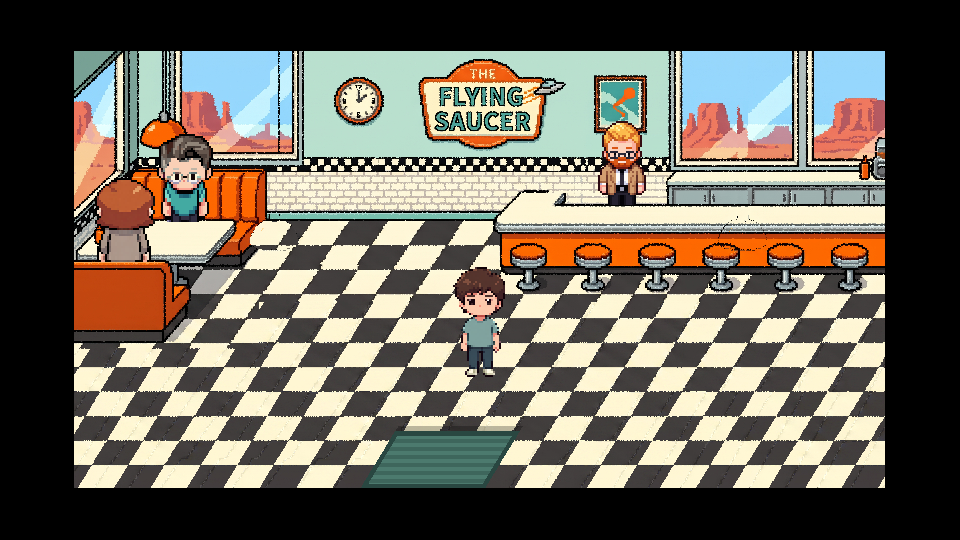
The Flying Saucer diner: a checkerboard floor, orange booths, and three people to talk to.
The Flying Saucer, Rachel NV. Bob and Travis are in the booth.

The subject

The paper is disputed. The twelve men on it were real.

“And he's right about all of it. Every fact in there is solid. But Chris looks at a thing and asks how it was made. I look at a thing and ask who had to live inside it.”

— Xander, who runs the motel, about Chris, who runs the diner

Chris, on the eleven years: “He buys the coffee. I buy the pie.”

What we're building is the argument itself: ten places on the record, and the people who've spent their lives inside it.

So the game is knocking on doors. You get a careful, sourced account from someone, cross the road, and get another from someone who doesn't dispute a single fact in it and won't go anywhere near the same conclusion. Whoever you ask second already knows what you heard first, and you do that across all ten regions.

The long version, and what it cost some of them, is on the about page.

Xander

Who had to live inside it

Forrestal went out a window and the diaries were published edited. He asks what a secret costs the people carrying it.

Chris

How it was made

Every fact checks out, and that's exactly what interests him. He asks how a story like this gets built.

Jon

Somebody who checked

Four years on a famous piece of 1997 film that half the world argued about. He went and looked, and he'll tell you it's a fake.

Clint

Nineteen years, nothing seen

Roasts his own coffee. Has never seen a light in the sky and still doesn't think anyone is lying.

The full game

Ten regions, in order. One is finished. Nine are standing empty.

Above Black is a top-down action-adventure investigation into UAP disclosure, built as a route rather than a map — ten regions, walked in order. Rachel, Nevada is region 01, the only one you can play.

The evidence under the ten is wildly uneven and we don't sort it into believable and silly. Region 04 is gun-camera video the Pentagon stopped denying; region 10 is one man's account of the far side of the Moon. You aren't touring any of them — every region is somewhere you have to get into. How that's meant to work is on the about page.

Every stop carries its own eight colours and a drawn landmark, so a region is identifiable before you read its name. Twelve routes, one of which is a flight. Click it to open full size.

One of these ten is finished. Playable means painted, populated, and you can walk it today. Concept means drawn and then greyboxed — the room exists at its real size, with the roads and the doors that reach it, and there is nobody in it. That's the other nine. Four rooms out along the route have a bed you can sleep in to save, and past that there is nothing to do out there yet — nor any way to get there from the demo, which stops at the locked road out of Rachel. A greybox isn't a level, and on region 10 it isn't a place either — that one illustrates something a man wrote down, and the card says so.

01

Where you start

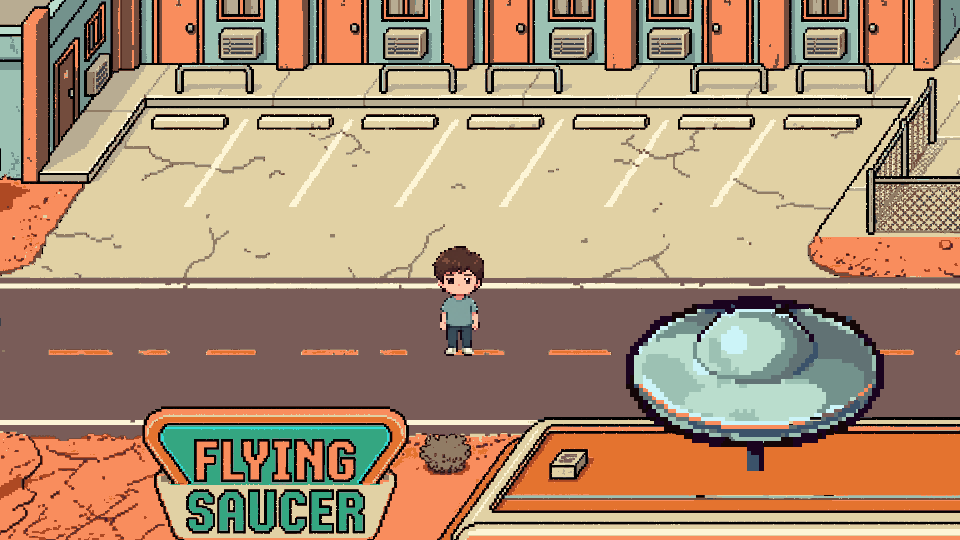
The only part of this that exists, and the only picture on this page that's a photograph of something running.

Screenshot from the playable build: the two-lane road through Rachel, with the Dreamland Motel on one side and the Flying Saucer diner on the other.

01Playable

The Town — Dreamland Motel, Rachel NV

Route 375, two lit signs, and the whole Majestic 12 account told twice by two men who've been arguing about it for eleven years.

Try thisAsk both of them about Majestic 12, in whichever order you like — the second one already knows what you heard first.

Six rooms, six characters (four written through), and a bed you sleep in to save. About fifteen minutes, in your browser, no account needed.
02 – 04

Nevada, and the Pacific

A base the government spent decades not confirming, a mountain nobody can produce a floor plan for, and a video the Pentagon released.

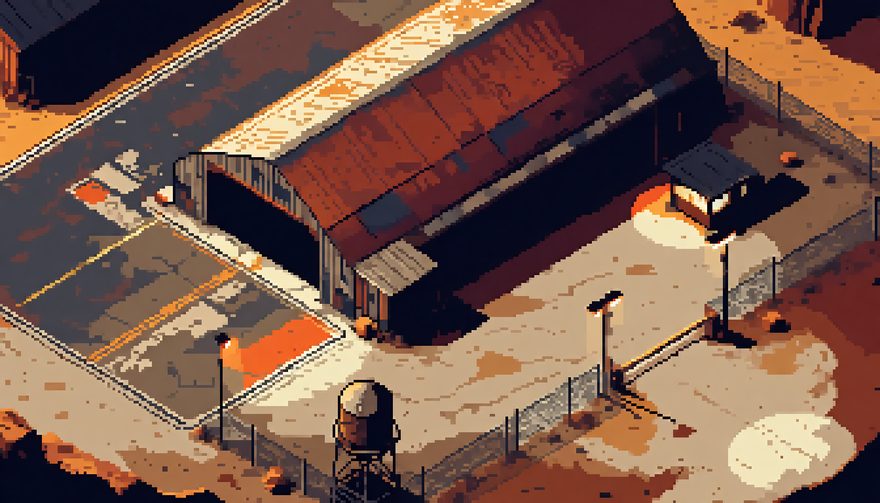
Concept art: a low hangar and guard post on a floodlit desert apron at night.

02Concept

Area 51 — surface

The most photographed fence in America, on a road you're not supposed to be on. The CIA conceded the base existed in 2013. What anybody actually wants to see is on the other side of the wire.

Open questionwhat a player actually does at a perimeter they cannot storm.

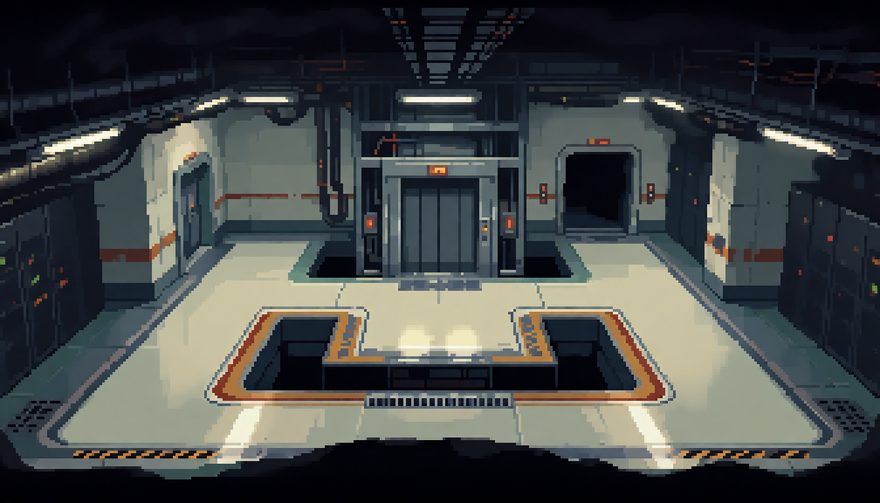
Concept art: an underground bay with blast doors, equipment racks and a freight lift.

03Concept

S-4 — underground

A 1989 Las Vegas television broadcast described nine craft under a mountain and a fuel nobody had synthesised until 2003, and that wasn't named on the periodic table until 2016. Everything argued about it since traces back to that broadcast.

Open questionwhat you do with a sample that either makes him right or makes him ordinary.

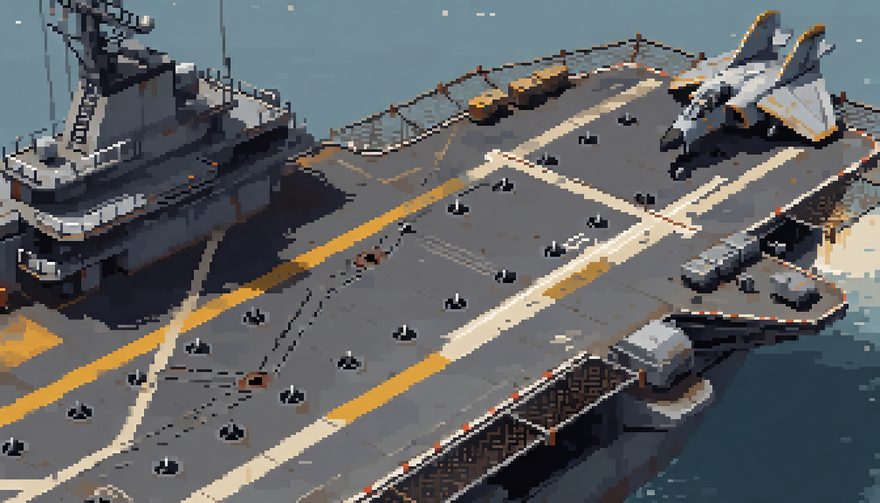
Concept art: a carrier flight deck with painted markings and a parked jet.

04Concept

USS Nimitz

November 2004, off Baja. A radar track, a FLIR tape, and a lot of people who've read both.

Open questionwhether the hours before an intercept are more interesting than the intercept.

05 – 07

Antarctica, Utah, and Washington

A real 1947 naval expedition, a real ranch a billionaire pointed instruments at, and the city where the government said something on the record. They sit in this order because that's the order you walk them. The order isn't a claim about evidence.

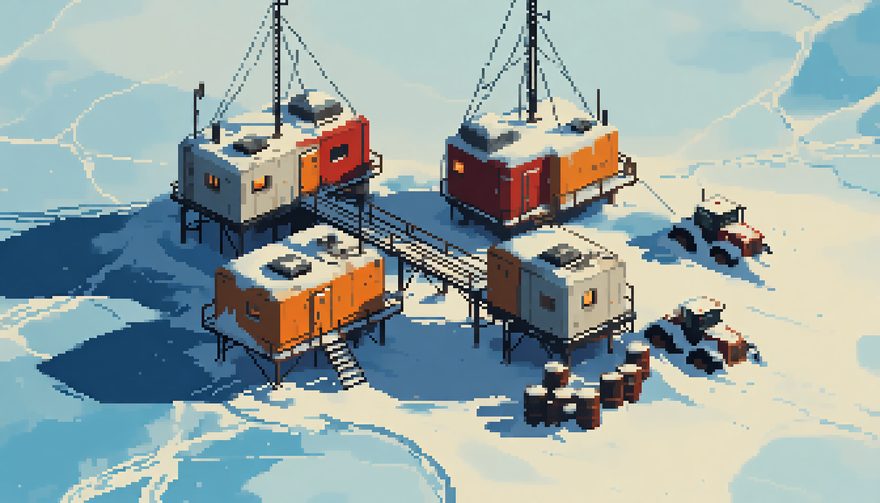
Concept art: modular huts raised on stilts over an ice shelf, linked by a walkway.

05Concept

Antarctica

Operation Highjump was real — a large naval expedition sent to the least strategically useful place on Earth over the winter of 1946 and 1947. Everything said about why is argument.

Open questionwhat a region does when the weather is the antagonist.

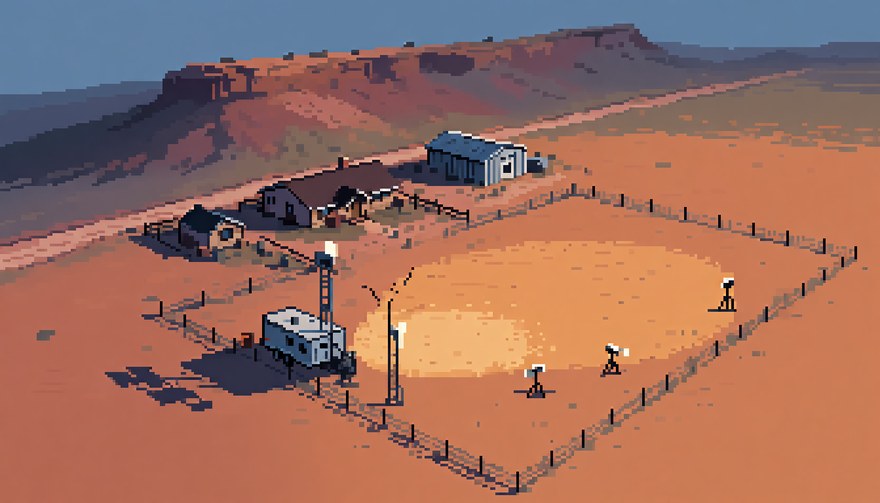
Concept art: a fenced Utah ranch at dusk with a research trailer, mast and tripod-mounted cameras aimed at an empty pasture.

06Concept

Skinwalker Ranch

Acreage in the Uinta Basin that a billionaire bought in 1996 specifically to point instruments at. The folklore came with the land.

Open questionwhat you write in the log when the log and the camera disagree.

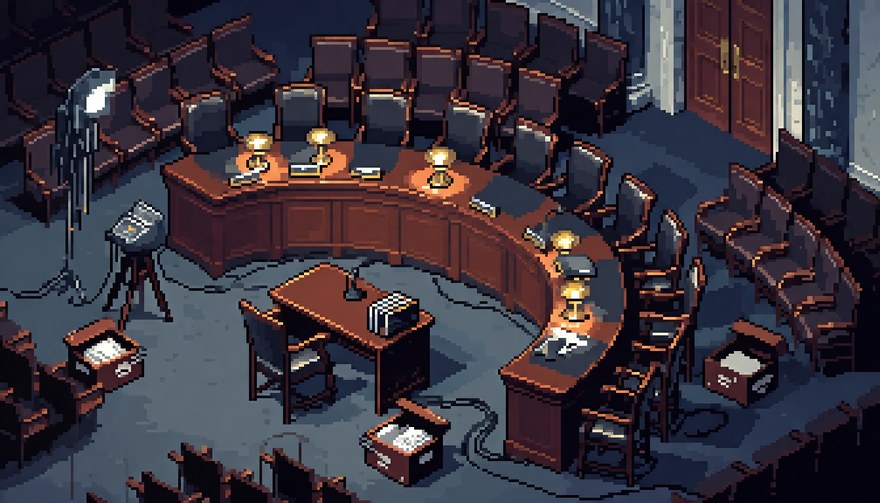
Concept art: an empty congressional hearing room, the curved dais lit by desk lamps, a witness table and microphone facing it, and boxes of paper on the floor.

07Concept

Washington DC

Everything the government has said about this out loud, it said here. In 2022 a House subcommittee held the first open congressional hearing on the subject in more than fifty years, and the Defense Department now runs a standing office to collect and assess the reports.

Open questionwhat you do in a room where every answer was cleared before it was given.

08 – 10

The last three

A records office full of redacted manifests, then a broadcast studio, and then the Moon on almost no evidence at all. They come last because that's where they sit in the order.

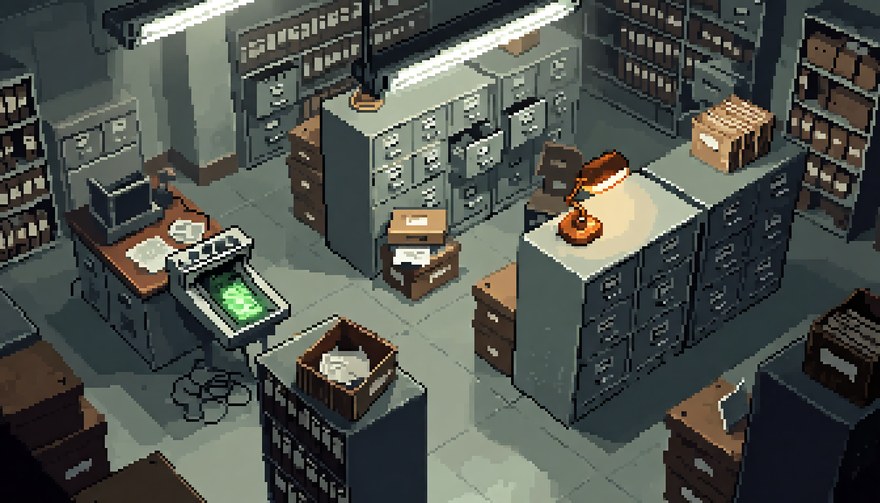
Concept art: a fluorescent-lit government records room with filing cabinets, archive shelving, a microfiche reader and stencilled banker's boxes.

08Concept

NASA

The shuttle flew classified Defense Department missions. You can look up which ones were classified. What was in them isn't on the record.

Open questionwhether a records office can be a level, which we think it can be.

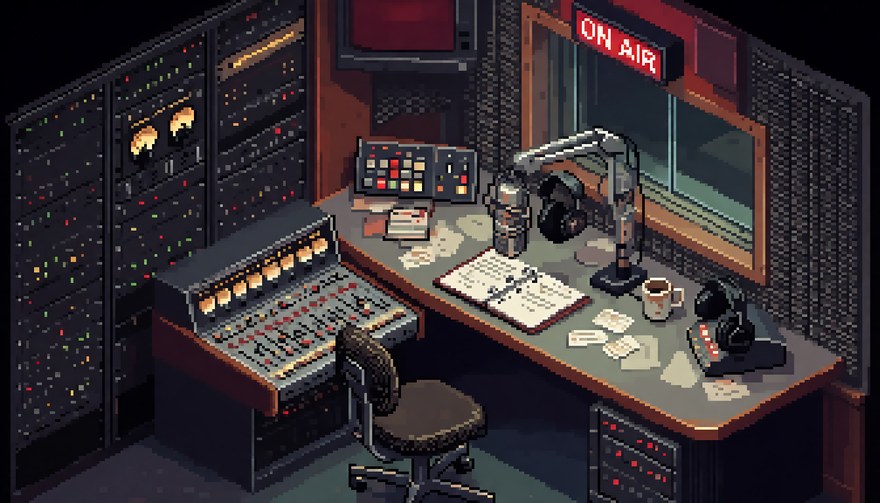
Concept art: a broadcast studio at night, with a mixing desk, a microphone on a boom arm, headphones and a lit ON AIR sign above the window.

09Concept

New York City

A Pentagon program studied the phenomenon between 2007 and 2012, and the public didn't learn its name until 2017. Somebody has to say a thing out loud before it counts as said, and this is the room where that happens.

Open questionwhat a room with nothing in it but a microphone is worth, this far along.

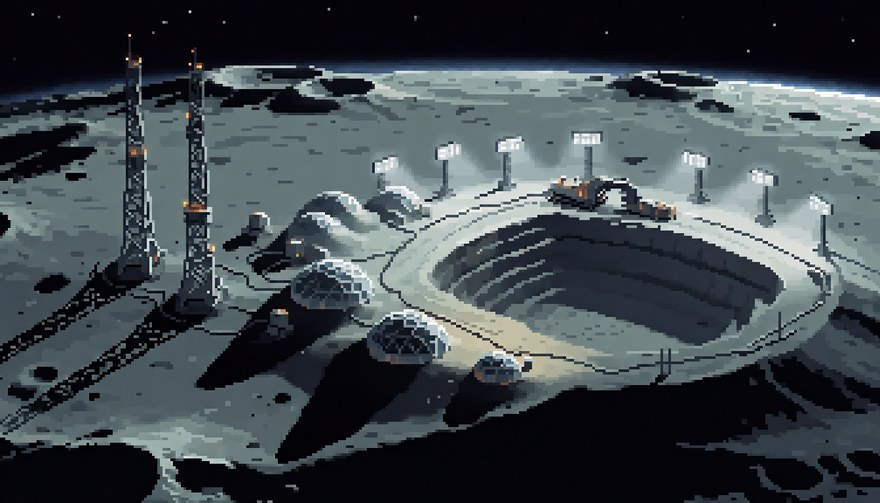
Concept art: structures on the lunar far side seen from above — lattice towers with amber lights, geodesic domes half sunk in the dust, and a terraced excavation with machinery parked at the rim.

10Concept

The Moon

Ingo Swann worked on remote viewing at Stanford Research Institute in the seventies. In a book he published in 1998 he wrote that he was asked to look at the far side, and came back describing towers, domes, lights and digging. That's a claim in a book and there's nothing under it. The drawing above is his account, not a photograph of anything.

Open questionwhat you do in the one place on the route that exists only because a man said so.

Ten regions is a lot of rooms, a lot of writing and a lot of art. That's why this page exists. We built region 01 to find out whether the thing works on someone who isn't us. The other nine are standing there empty, and an empty room is a job posting.

Where it actually is

This is a proof of concept. Fifteen minutes of one.

We built it to answer one question: does this material land on someone who isn't us? The other job is to show enough of what the game feels like that you can decide whether you want a hand in making the rest.

The shape of the full game is still being worked out. How the story branches, what you actually do beyond talking, what the other nine regions play like. Those are open questions, and none of it is a finished design we're sitting on. Anyone who joins now gets a say in them.

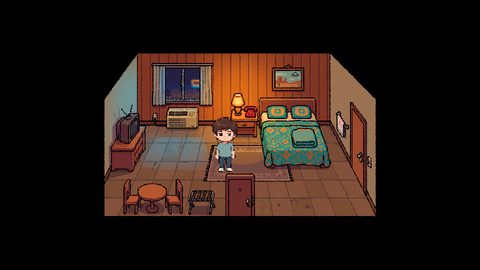
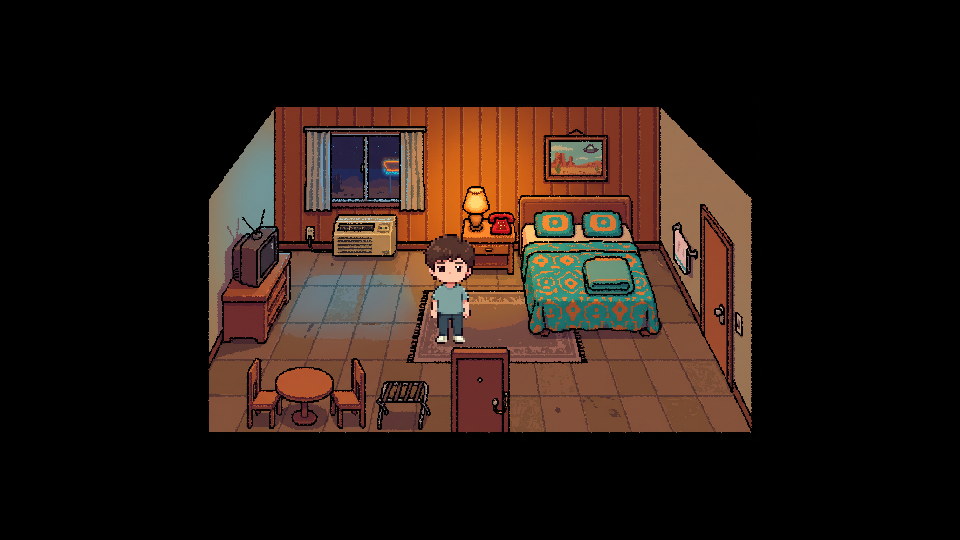
Room 2: a bed, a CRT television and a red telephone.

About fifteen minutes. Runs in the browser, nothing to install. The first visit pulls about 60 MB and keeps it — slow once, seconds every time after. If you're testing this for us, sign in first — it's the only way your notes and your answers reach us, and it saves your progress too.

Region 01 · Rachel, Nevada

The one you can walk today.

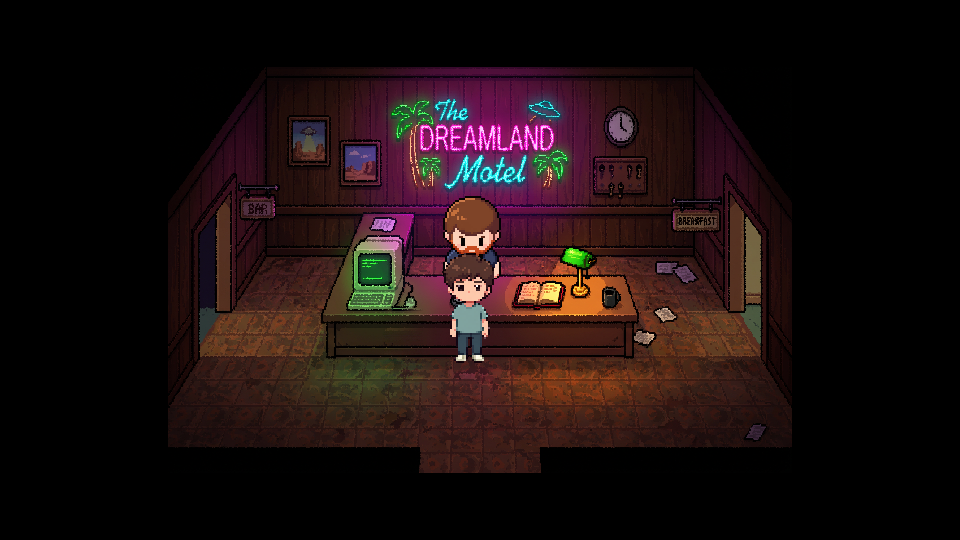
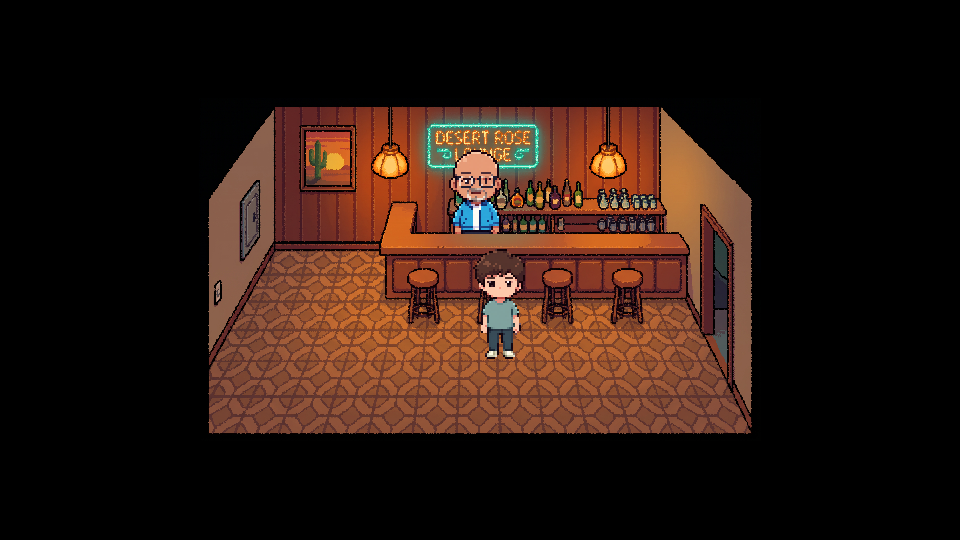
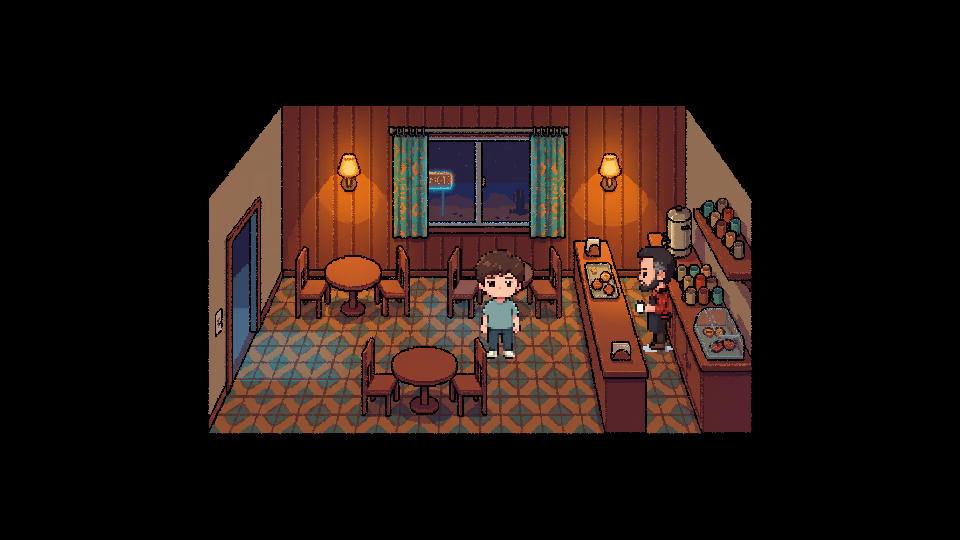
A highway, a motel, a diner, a bar, a breakfast room, and room 2, where you sleep to save.

The town: a two-lane road, the Dreamland Motel and the diner.
The road through town
The Dreamland Motel lobby with Xander behind the desk.
Dreamland Motel — lobby
The motel bar with Jon sitting at it.
The bar
The breakfast room with Clint and his coffee.
Breakfast room
Room 2: a bed, a CRT television and a red telephone.
Room 2 — the save point
The diner interior.
The Flying Saucer

The boring but important part

Above Black is a browser game. Signing in with Google saves your progress.

Above Black is a free, in-development action-adventure that runs in your browser at aboveblack.app/play. It's made by Gigabit Arcade and is currently an early test build.

You can play the whole thing without an account. Signing in with Google is optional and does exactly two things: it saves your progress so you can close the tab and come back on another device, and it lets us see how far testers got so we know whether the game works.

When you sign in, we ask Google for three things and nothing else: your name, your email address, and your profile picture. We use your name and picture to show you who is signed in, and your email address to identify your save. Deleting it is self-serve, from your account page. We never post anything, read anything, or access any other Google service on your behalf.

And what it records.

To answer that one question we record what you did: which door you opened first, whether you went and found the other account, how long it took, and how far you got.

Only if you're signed in. Play without an account and nothing is recorded at all. No session, no events, nothing to delete. You also get no save, which is the trade.

We don't record what you type except the boxes you deliberately type into and send — your character's name, and anything you write in Tell us something or the feedback form. We never sell or share any of it. The privacy page lists every field, your account page shows your own rows, and two buttons there delete all of it the moment you confirm.

Why you're here

We're looking for people who want to help build it.

We want collaborators. An audience can come later. If any of this sounds like something you'd enjoy having a hand in, the recruiting page is where to say so.

Volunteer, unpaid, full credit, a real say. The details are here.

The route board